

Aviso por alerta naranja
Salidas suspendidas hoy
Debido a la alerta naranja, hoy, 19 de octubre de 2026, se suspenden las salidas entre Santa Pola y Tabarca.
Disculpa las molestias y gracias por tu comprensión.
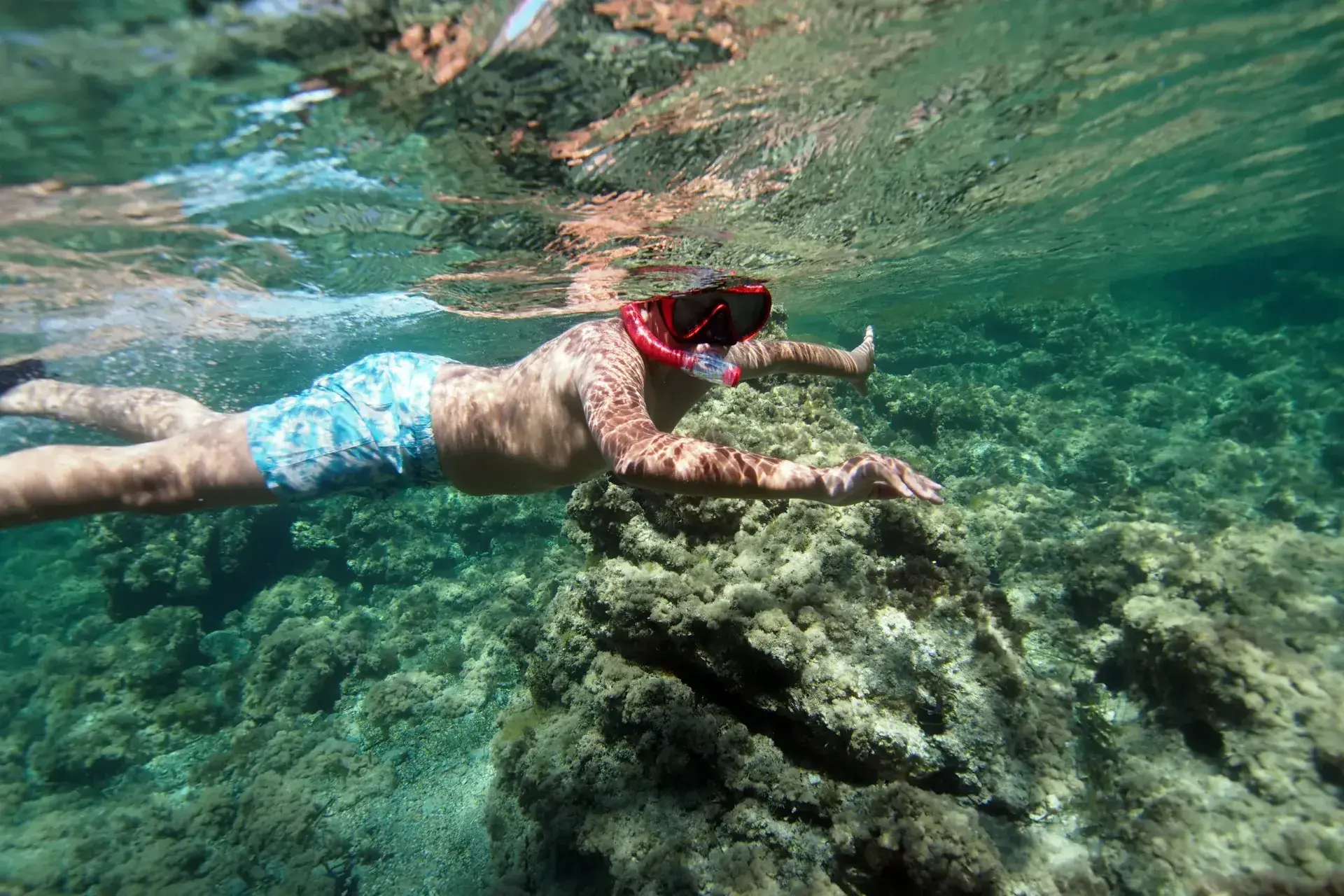
Island of Tabarca Alicante
A walled town, clear-water coves, the first Spanish Marine Reserve and a tabarquino caldero, all on an island that is walking.
Destination
Tabarca It brings together in very little space a walled town, open roads to the sea, transparent coves and a high value Marine Reserve.
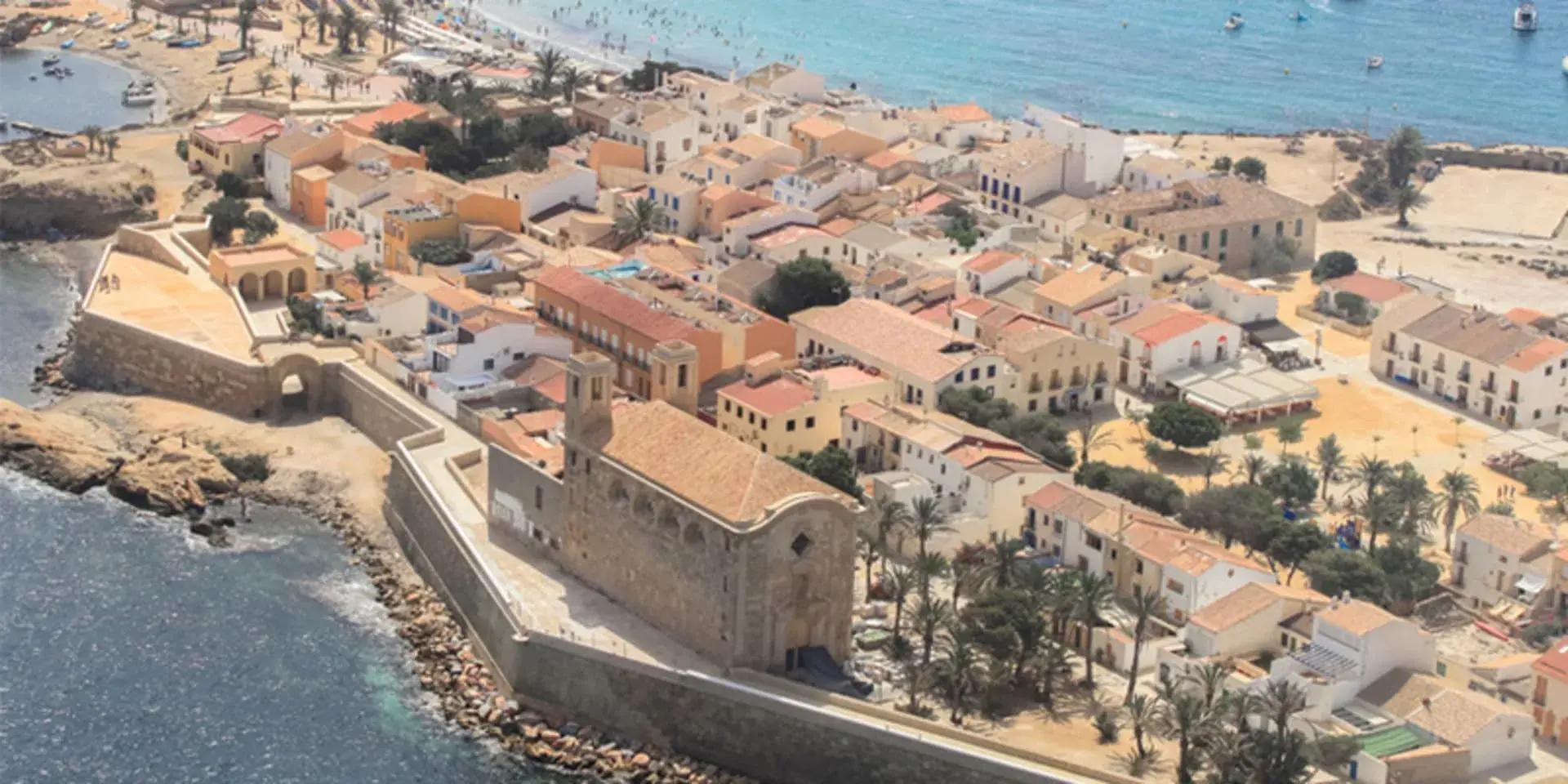
The Island of Tabarca is the only inhabited island of the Valencia Community and belongs to the municipality of Alicante, off the coast of Santa Pola. Its urban part concentrates the 18th century citadel and the port; the rest, known as the Field, opens in a low and rocky landscape to the lighthouse.
Everything is walking and without great levels, so in a single day you can combine heritage, bathroom, landscape and table without haste. That nearby scale is much of its charm.
Essential sites
The interest points of the Tabarca are very close to each other: on a quiet walk you see practically all.
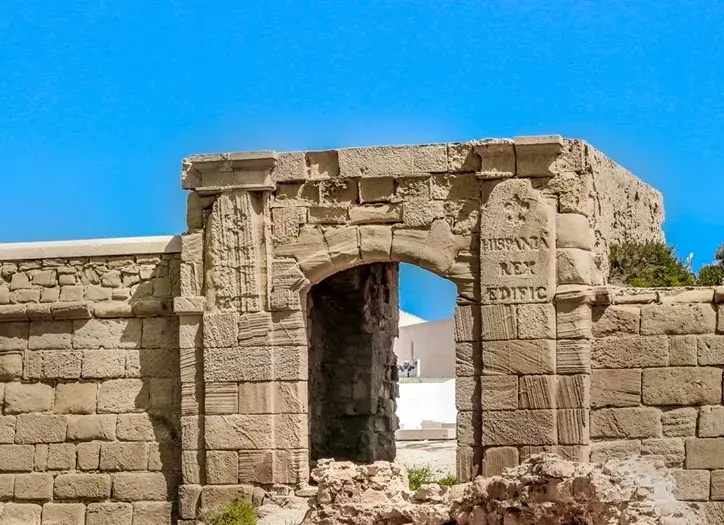
The fortified compound was built in the 18th century to protect settlers from Tabarka. The three monumental doors - San Rafael, San Miguel and San Gabriel -, the narrow streets, the square and the former Governor's House are preserved. The whole set has been declared a Historical-Artistic Set since 1964.
Head the village with a sober volume of neoclassical language and details of Baroque inspiration. It is the religious building of the foundational colony and one of the island's visual reference points from the sea.
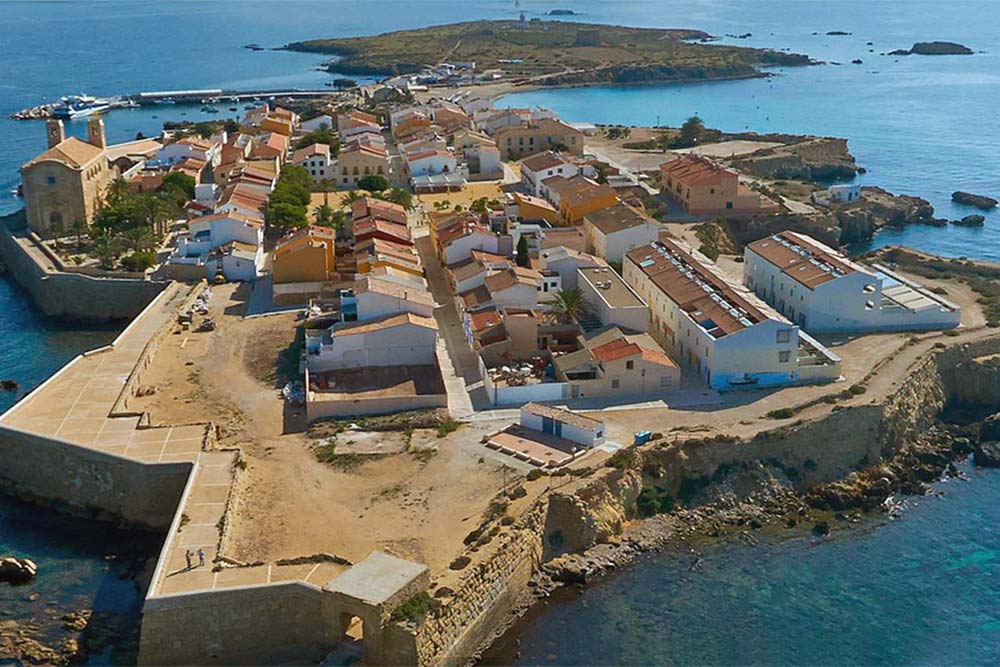
Built in 1854, it rises on the eastern end of the island. The road to it crosses the open area of the countryside and gives continuous views of the rocky coast and the Mediterranean horizon.
18th century defensive tower located on the top of the island. It was part of the coastal surveillance system along with the walls and today is one of the most photographed milestones of the tour.
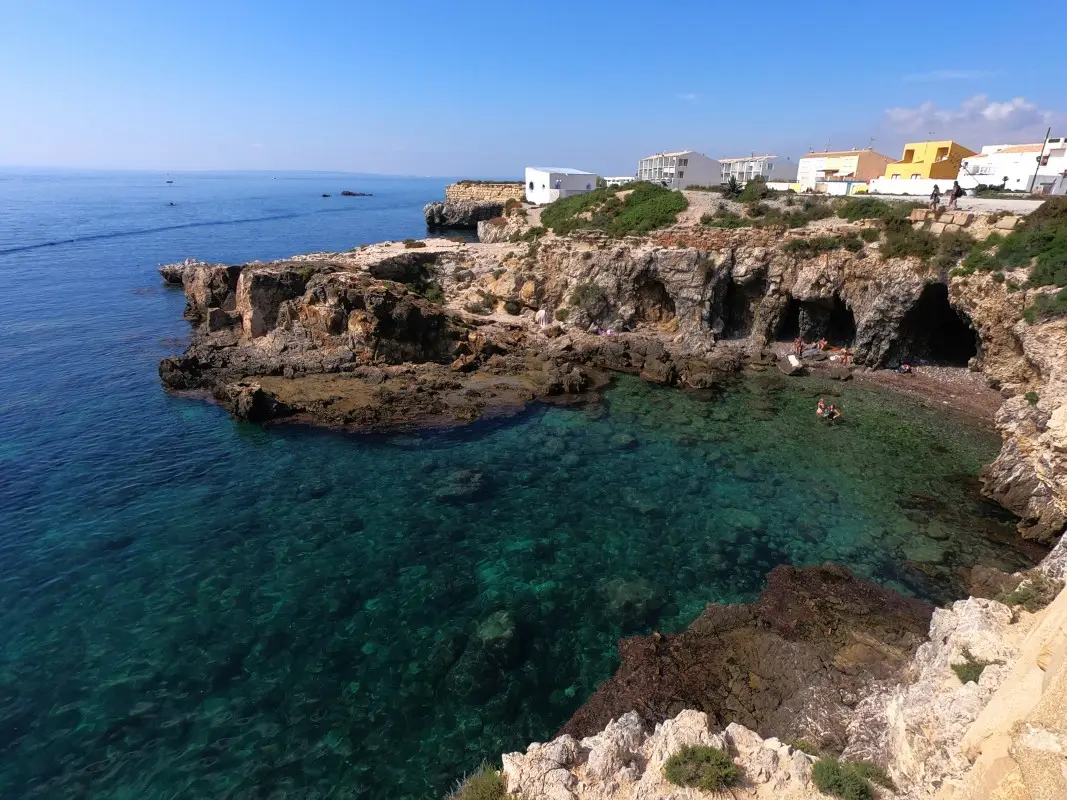
From the old quarry came much of the stone of the walls. Around it, the coast line alternates rock platforms, small sea caves and coves where water changes color according to time.
The sea surrounding the island is part of the Marine Reserve of Tabarca. From the ground, the transparency of water on the posidonia meadows is appreciated, especially in the northern strip.
Experiences
Walking, bathing and looking at the seabed are part of the same day. We don't have to choose.
If you are looking for organized activities around the island, see the activities and services of Tabarkeras.
The Mediterranean
The main beach is the accessible and familiar option; the coves offer rock, clear water and a quieter atmosphere.
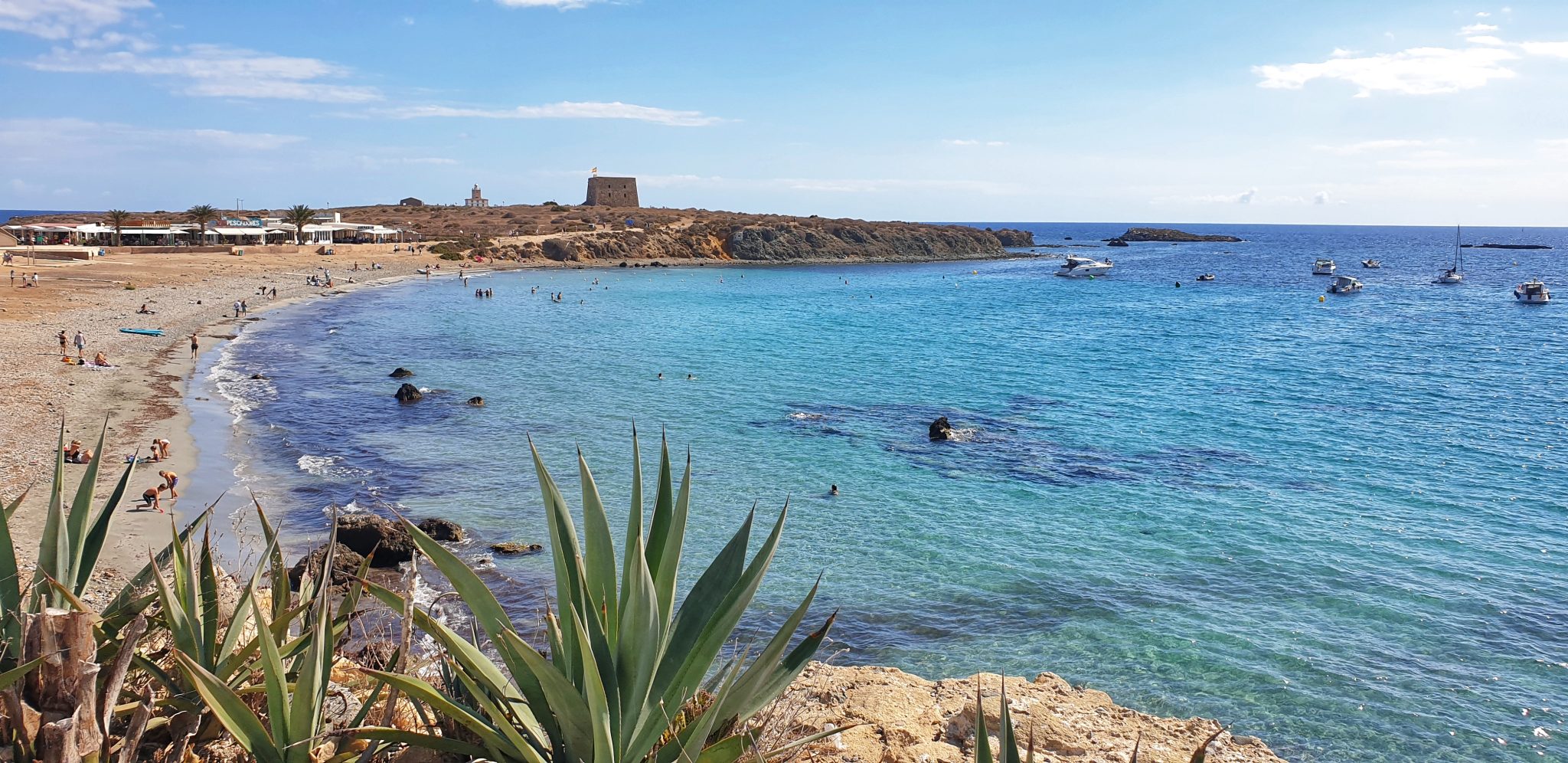
It is the main beach of the island, located in the isthmus between the village and the countryside. Mix sand and rolling song, has progressive entrance and is the most comfortable to spend a long time or come with children.
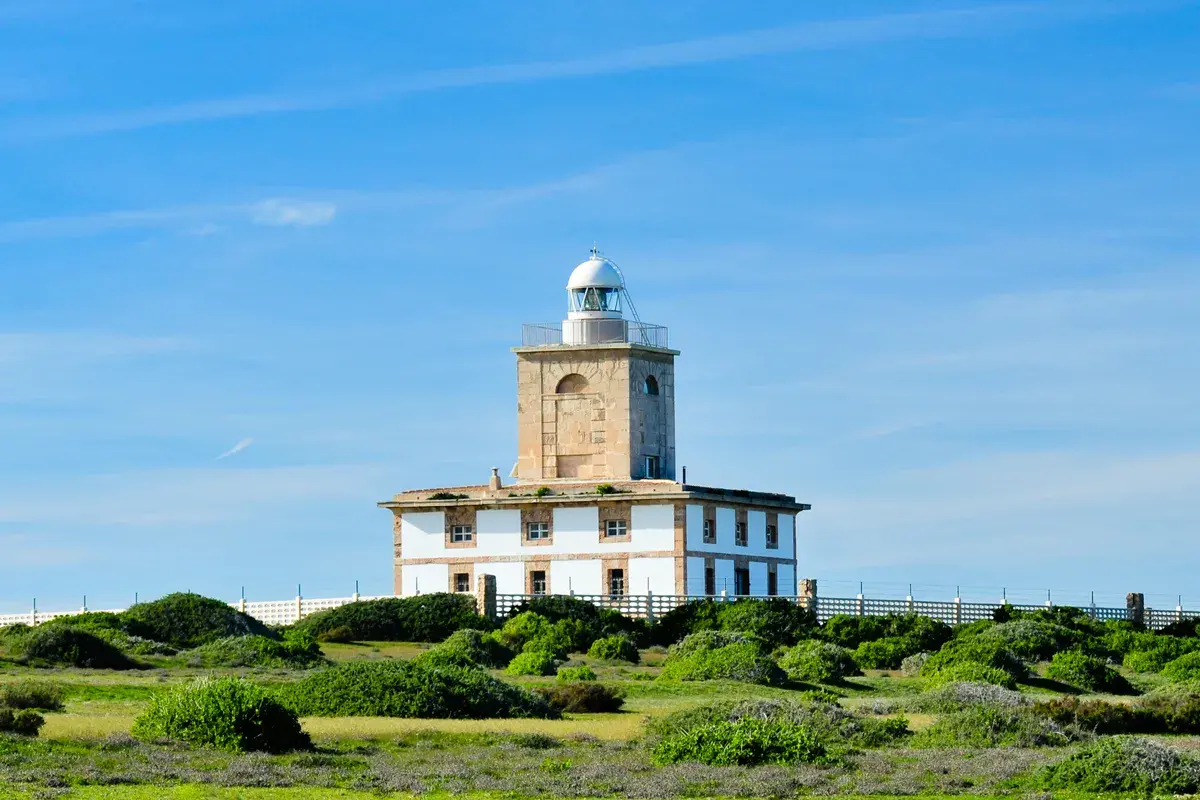
A safe inlet on the north face, rocky background and very clear water. It is one of the usual places to snorkel when the sea is calm.
Area of rocky platforms and small sea caves. It is not a sand cove: it is accessed by walking and it is appropriate to wear shoes that it grabs.
On the south side, more exposed to the waves. The Llop Marí cave is one of the most well-known formations of the Tabarquino coast and is especially appreciated from the sea.
rocky coast near the lighthouse, with deep and transparent water. Their occupation and bathing conditions vary greatly according to the wind and the state of the sea.
The best bathing area changes every day: if it blows up, the north face is usually more guarded, and the other way around. It is worth looking at two or three points before it is installed.
Protected nature
The sea around the island was declared marine reserve in 1986 and covers 1,754 hectares. It was Spain's first marine reserve and remains the model's reference.
This protection explains what you see when you put your head in the water: Ocean posidonia in good condition, which oxygenate the water, set the bottom and serve as a refuge to dozens of species. It is also the reason for the transparency that is seen from the surface.
To enjoy it is to respect it: not to extract organisms, not to start vegetation and always to comply with the regulations in force and the conditions of the sea. You can see the diving activity in Tabarca If you want to meet her inside.
New Tabarca
Before having a village, the island was called Plana Island and was a boat shelter. Its modern history begins in the 18th century.
By order of Carlos III was fortified and populated with families of genovese origin from the Tunisian island of Tabarkafrom where it takes its current name: New Tabarca. Engineers Fernando Méndez de Ras and Baltasar Ricoud led the citadel project.
The walls, the three doors, the church, the Tower of San José and the urban route, have been protected as a Historical-Artistic Set since 1964.
You can expand the full account on the page of history of the island of Tabarca.
Sailors
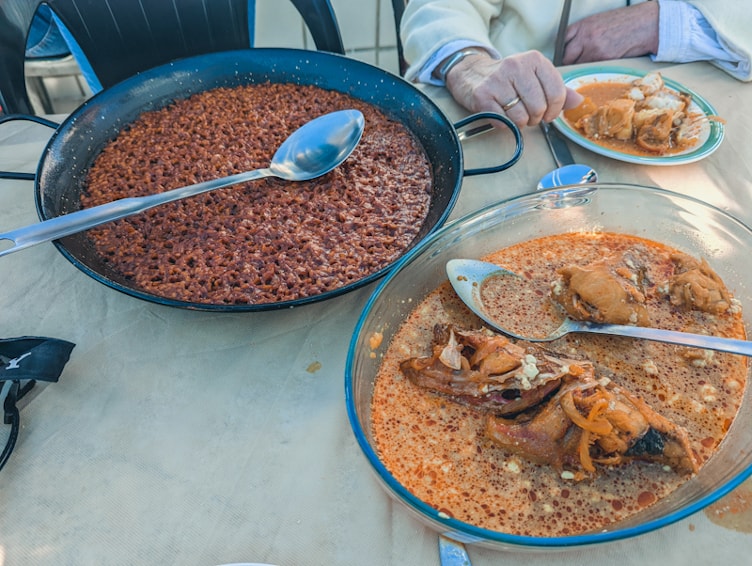
The cucumbers is the dish most linked to the island and the best way to understand your kitchen.
It is made from rock fish and is usually served in two steps: first rice cooked with fish broth, then fish with all i oli. It is a marine recipe for use, born on board and tuned on the ground.
Next to it you will find rice, grilled fish and simple Mediterranean cuisine. In high season you should book in advance and also book time: eat in Tabarca It's not a quick procedure.
Simple ytinerary
An order that works well: morning heritage, landscape before lunch, afternoon bath.
With a full day, it gives time to everything without plunder. Half a day it allows to see the village and take a bath, but leaves out the lighthouse or the food quiet.
Before you go
From Santa Pola
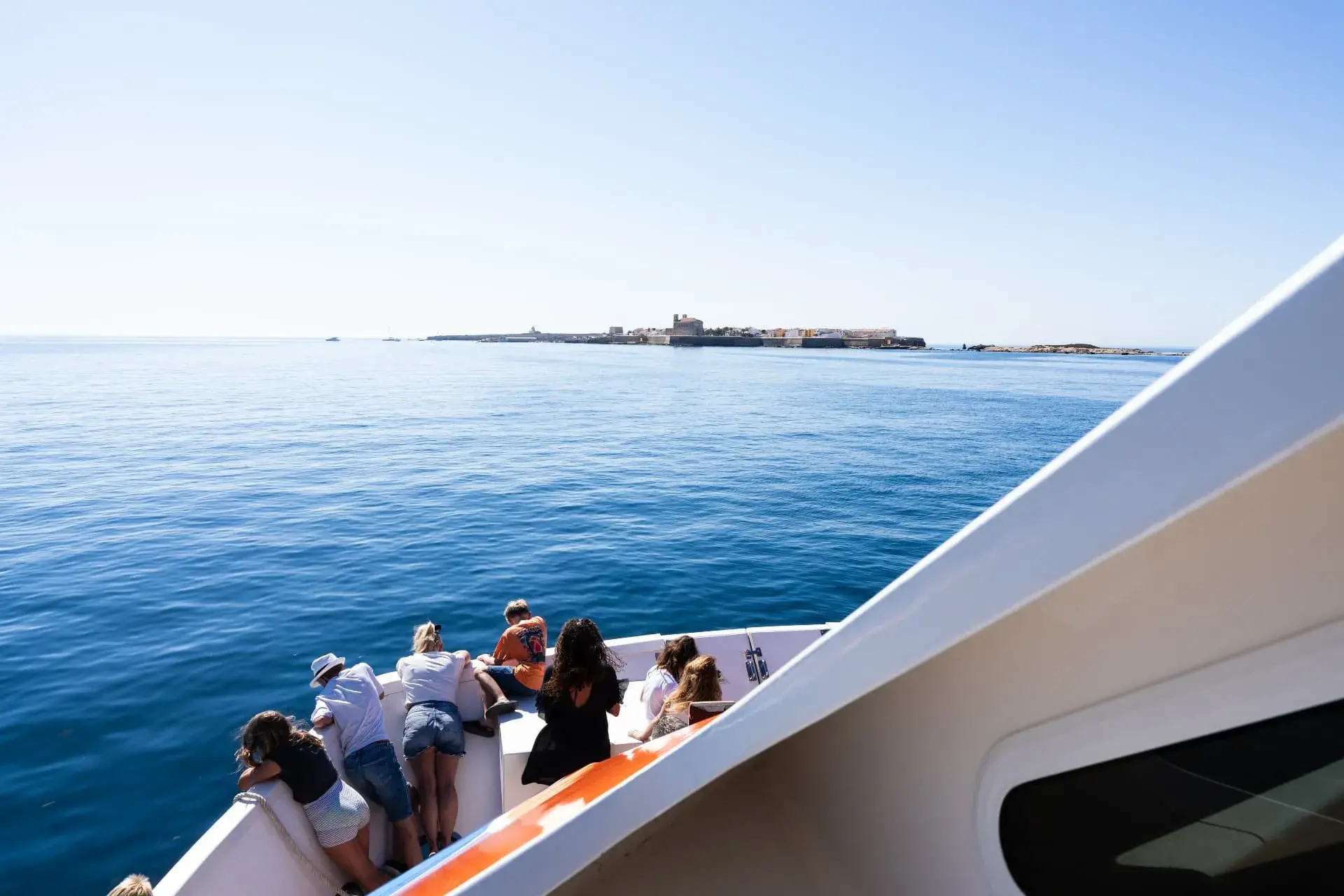
A Tabarca You only get by sea. Tabarkeras connects the port of Santa Pola with the island on a 25-minute journey.
The ships leave the port of Santa Pola, with boarding in the dársena itself, and they are docking in the port of Tabarca A few meters from the village. The exits and rates are consulted on their specific pages, which are the ones always kept up to date.
Common doubts
The village with its three doors, the church of San Pedro and San Pablo, the Tower of San José, the open area of the countryside, the lighthouse of 1854 and the coast of coves and caves.
Walk around the island, bathe, snorkel in the allowed areas, discover its coves and eat jabarquino or rice caldero.
A full day is ideal: it allows to see the village, reach the lighthouse, eat without haste and bathe. In half a day it gives time to the village and the beach, but little more.
Yeah. The island is just over a mile long, it is flat and is all on foot. No motor transport for visitors.
La Playa de Tabarca next to the village, it is the most accessible and familiar. Puerto Viejo, la Cala del French and the entrants of the north coast are quieter and rocky.
Yes, in the allowed areas of the Marine Reserve and with the sea in calm. The transparency of water and the posidonia meadows make you see a lot of life near the shore.
The most representative dish is the tabarquino caldero, usually served in two steps: first rice and then fish. There are also rice, iron fish and Mediterranean cuisine.
Just by sea. Tabarkeras connects the port of Santa Pola with Tabarca in about 25 minutes; tickets and schedules are consulted on their respective pages.
Yes, especially if you are interested in combining sea, heritage and walk on the same day. It's a full day destination, not a quick visit.
Yeah. New Tabarca is a pedany of the municipality of Alicante, although the usual access by boat is made from the port of Santa Pola.
Do you have any specific questions? You can contact the team of Tabarkeras or read more about the island on the blog of Tabarkeras.
Your next getaway
Choose the date, check the exits from Santa Pola and book your square with Tabarkeras.